
Legal tech
1st runner-up at the GDG Agentic AI Hackathon, top performer at ETH Global
Legal-E
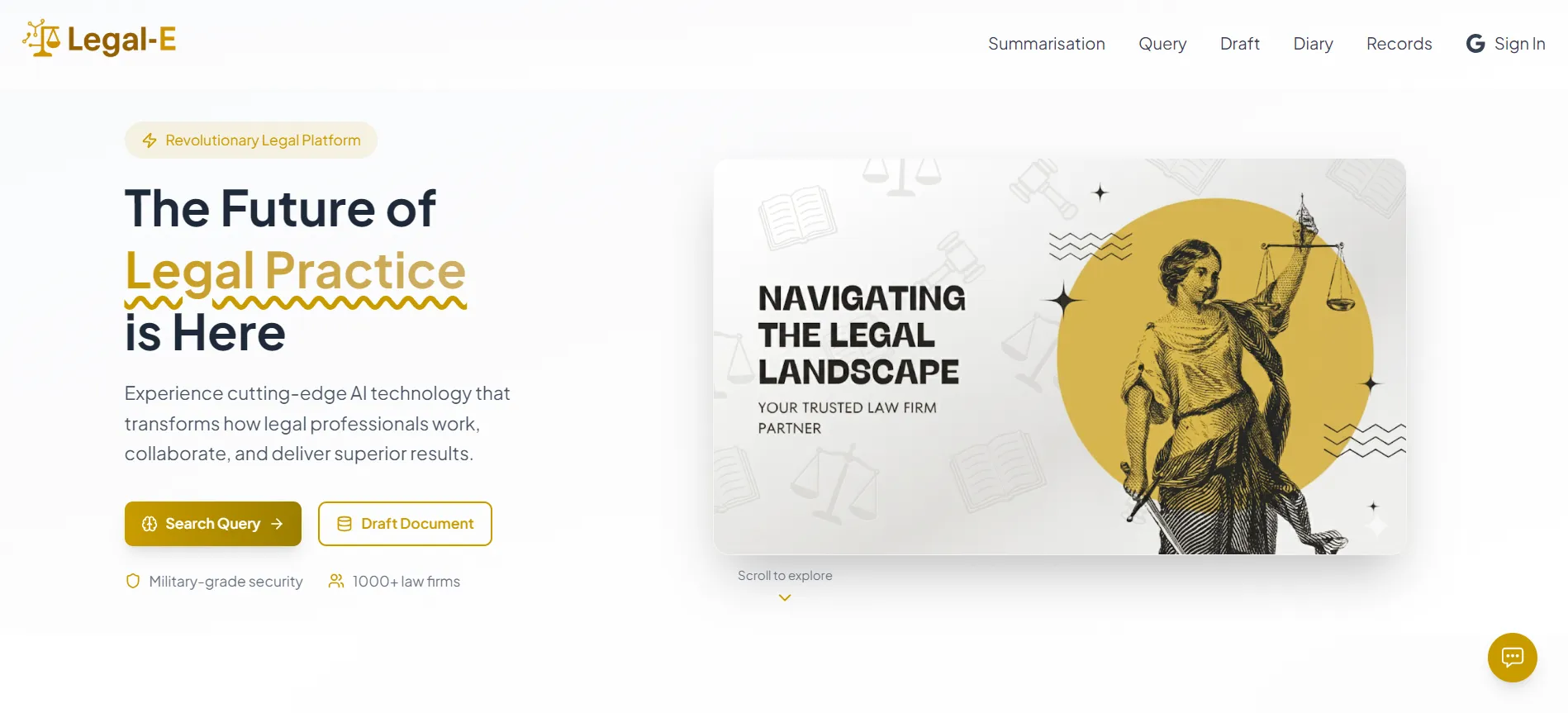
Legal work with the reading done for you. Document summarization, a legal document generator, an A2A query engine, and consultation grounded by RAG.
Problem
Legal work is reading. Contracts, filings, and precedents pile up faster than anyone can summarize them, drafting a standard document still starts from a blank page, and getting a straight answer to a legal question means either a paid hour or a forum thread.
Legal-E had to do the reading, do the drafting, and answer questions without inventing law.
Approach
Documents go through a RAG pipeline so every answer is grounded in the actual text rather than the model's memory. On top of that sit four tools: AI document summarization, a legal document generator, an A2A protocol query engine where agents hand work to each other, and a consultation flow for plain-language questions.
Gemini and Groq handle the model calls, Supabase handles auth and storage, and the React and TypeScript front end keeps the whole thing usable by someone who is not a developer.
Architecture
1. Ingest
Documents come in through the app and are stored in Supabase before anything reads them.
2. Ground
The RAG pipeline indexes the text so every downstream answer can point back to a passage.
3. Generate
Summarization and the document generator produce drafts through Gemini.
4. Consult
The consultation flow and the A2A query engine answer questions, with agents handing tasks to each other.
Stack
- React
- TypeScript
- RAG
- Gemini
- Groq
- Supabase
- A2A protocol
Outcome
Legal-E was 1st runner-up at the GDG Agentic AI Hackathon and a top performer at ETH Global. Two different judging panels, same product.
What I'd do differently
Grounding was the whole game. The moment answers cited the source passage, the demo stopped being a chatbot and started being a tool people trusted. The A2A engine taught me that agent handoffs need contracts as strict as any API.